Quick Answer
If you manage property in California, your ADA signage requirements are more demanding than federal standards alone. California Title 24 adds state-specific requirements — dual restroom symbols, precise mounting heights, and stricter Braille specifications — that inspectors enforce rigorously. Complying only with federal ADA will fail your California inspection.
⚡ Key Takeaways
- California Title 24 requires geometric door symbols on restrooms — federal ADA does not
- Non-compliance liability: significant per violation under the Unruh Civil Rights Act
- A building with 50 non-compliant signs faces significant in potential exposure
- Powell’s provides free on-site compliance assessments for California properties
Why Is Federal ADA the Floor, Not the Ceiling?
The Americans with Disabilities Act sets minimum accessibility standards nationwide, but California’s Building Code Title 24 adds state-specific requirements that go further. Inspectors enforce them rigorously. If you’ve renovated a commercial property using only federal ADA guidelines, you’re likely out of compliance with California law.
What Are the Key Differences Between Title 24 and Federal ADA?
Restroom Door Symbols
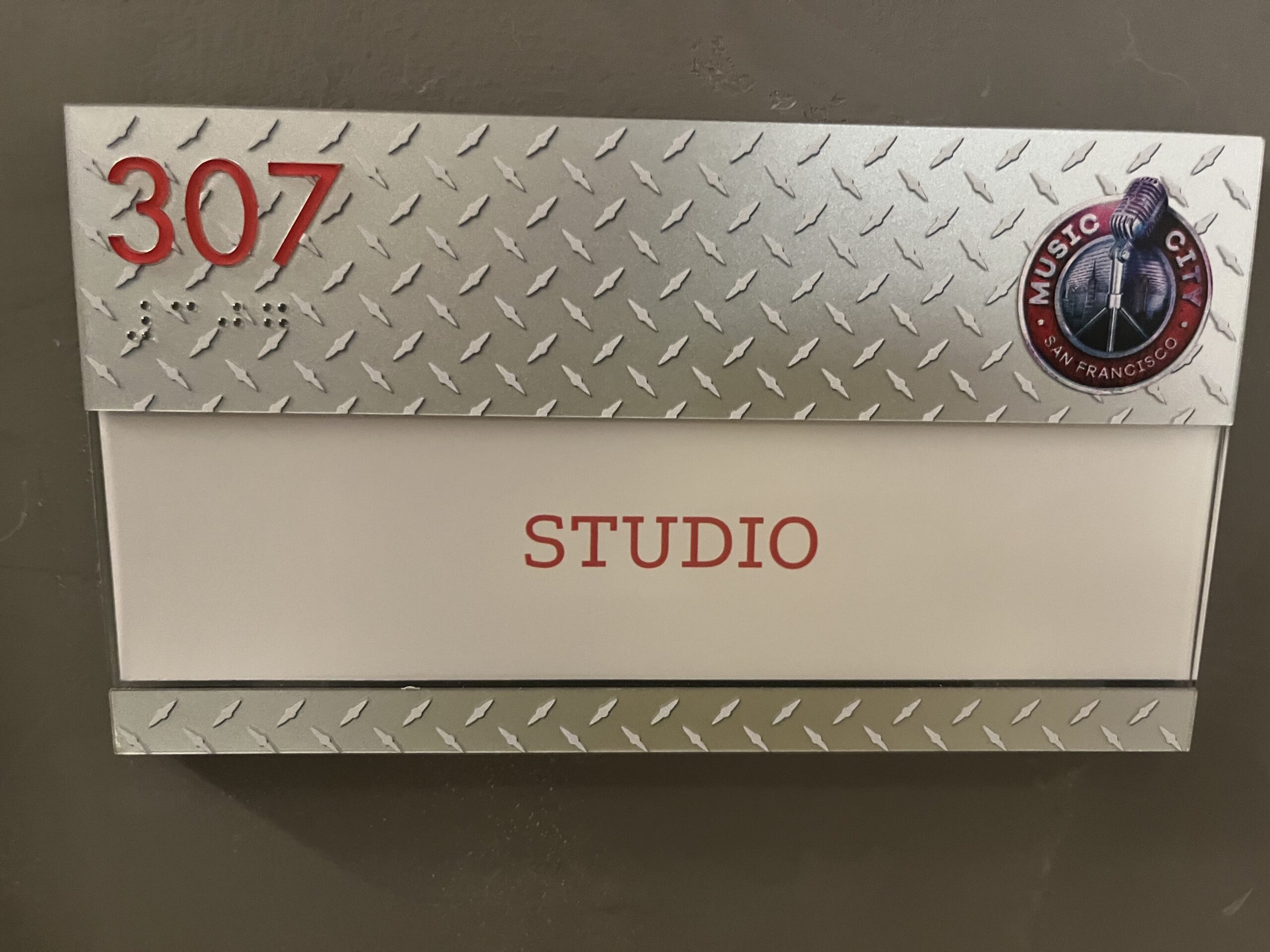
This is the most commonly missed requirement. Federal ADA requires tactile room signs beside restroom doors. California Title 24 additionally requires geometric symbols on the door itself — a raised triangle for men’s rooms and a raised circle for women’s rooms. Most out-of-state sign vendors miss this entirely.
Mounting Location Specifics
Federal ADA specifies mounting on the latch side of doors. Title 24 adds precise height requirements: the baseline of the highest tactile character must be no more than 60 inches above the finished floor, and no less than 48 inches.
Need an ADA Compliance Assessment?
We offer free on-site assessments for California properties. Our team identifies every non-compliant sign so you can fix issues before your next inspection.
What Does Non-Compliance Cost Property Managers?
Non-compliance isn’t just a code issue — it’s a liability issue. California’s Unruh Civil Rights Act allows individuals to sue businesses for ADA violations with minimum statutory damages of significant per violation. A building with 50 non-compliant signs could face significant in exposure.
How Can Powell's Help With ADA Compliance?
We specialize in California Title 24 compliance. Every sign we produce meets both federal ADA and California-specific requirements. We handle the details that trip up other vendors — door symbols, mounting heights, Braille specifications, and contrast ratios. Whether you’re building new or retrofitting, we provide a complete solution: assessment, design, fabrication, and installation.
Title 24 & ADA Signage FAQ
Get Compliant Before Your Next Inspection!
Contact us for a free ADA compliance assessment.
Related Articles